Why Version Control Exists
›The Pendrive Analogy in Software Development
Before tools like Git, developers did not have version control systems.
They used very simple methods like pendrives, emails, and shared folders to share code.
At that time, software development looked easy… but it was actually very risky.
Let’s understand why version control became so important.
Life Before Version Control
In old days, a normal workflow looked like this:
- Developer A writes code
- Saves it on computer
- Copies it to a pendrive or sends by email
- Developer B downloads it
- Makes changes
- Sends it back
Files were named like:
project_final
project_final_v2
project_latest
project_latest_final
project_latest_final_real
Every name tried to say “this is the latest”,
but nobody was ever fully sure which one was correct.
Pendrives, Emails, and “Final” Folders
Developers used:
- Pendrives to carry code physically
- Emails to send zip files
- Folders like:
- final
- final_v2
- latest
- latest_final
The problem was simple:
There was no system to track versions automatically.
People depended only on file names and memory.
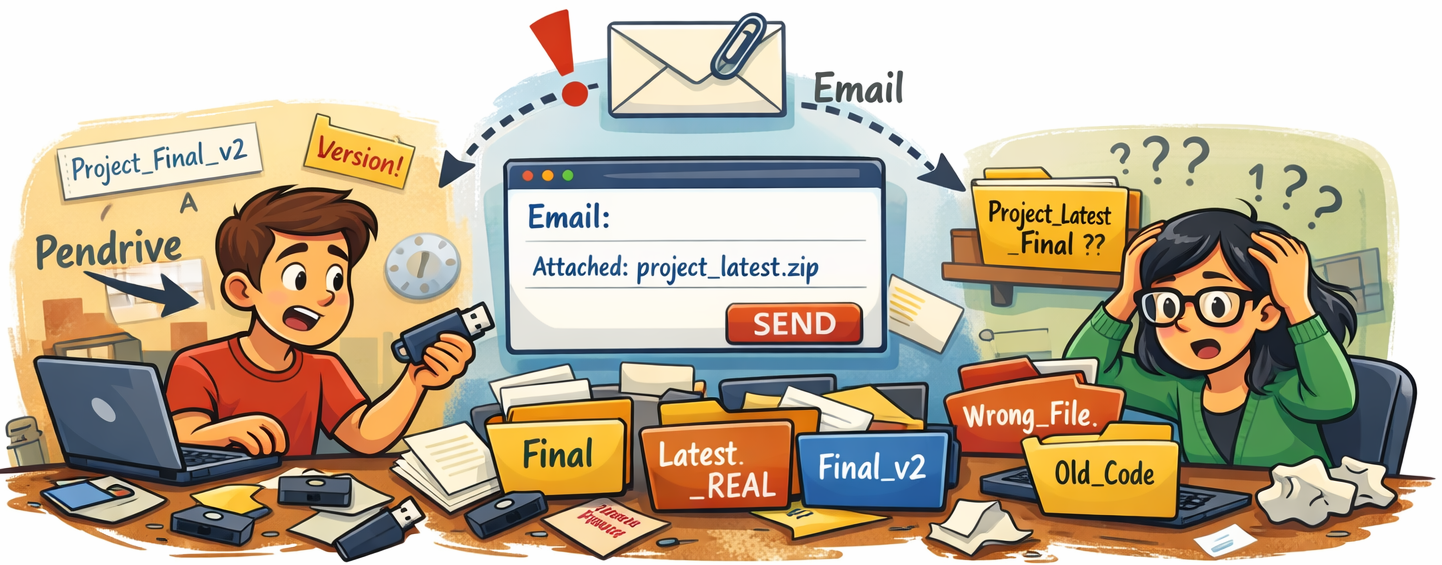
Developers sharing code using pendrive and email
Problems Faced Before Version Control Systems
›1. Overwriting Code
Two developers worked on the same file.
- Developer A edits file
- Developer B also edits same file
- Both send their version
Whoever sends last, deletes the other’s work.
Hours of work could disappear in one mistake.
›2. Losing Changes
Sometimes:
- Wrong file was sent
- New changes were not copied
- Old folder was uploaded
Result:
Yesterday’s work was gone forever.
No undo. No history.
›3. No Collaboration History
There was no record of:
- Who changed what
- When it was changed
- Why it was changed
If a bug came, people only guessed:
“Maybe you changed this line?”
“No, I didn’t.”
›4. Slow Team Work
People waited for:
- Emails
- Pendrives
- Replies
More time went into sending files
than actually writing code.
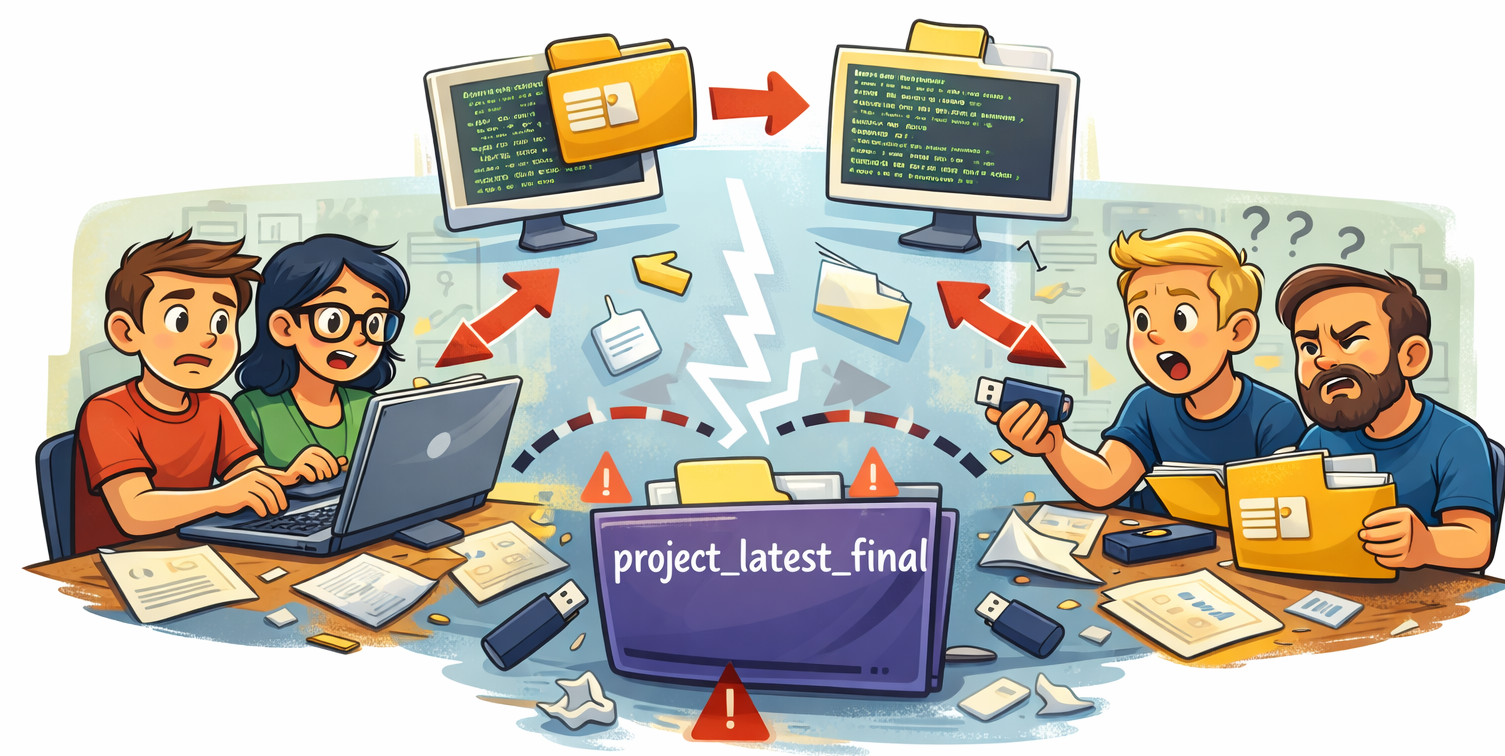
Multiple developers editing same file without version control
The Pendrive Analogy and Team Problems
Pendrive system works only if:
- One person edits at a time
But real software teams:
- Have many people
- Working at the same time
- On the same project
Pendrive system keeps only one “latest” file.
This is like a group project:
- One student saves the file
- Another student’s work disappears
- Then arguments start
The same thing happened daily in software teams.
Why Version Control Became Necessary
As software grew:
- Teams became bigger
- Projects became complex
- Mistakes became costly
Old methods failed.
Version control was created to:
- Save every change
- Keep full history
- Show who changed what
- Let many people work safely together
Now developers can:
- Go back to old versions
- Fix mistakes easily
- Work without fear of losing data
Pendrive Workflow vs Version Control Workflow
›Pendrive Workflow:
- One person works at a time
- Manual file sending
- Work often lost
- No history
›Version Control Workflow:
- Many people work together
- Automatic saving of changes
- Full history
- Easy rollback
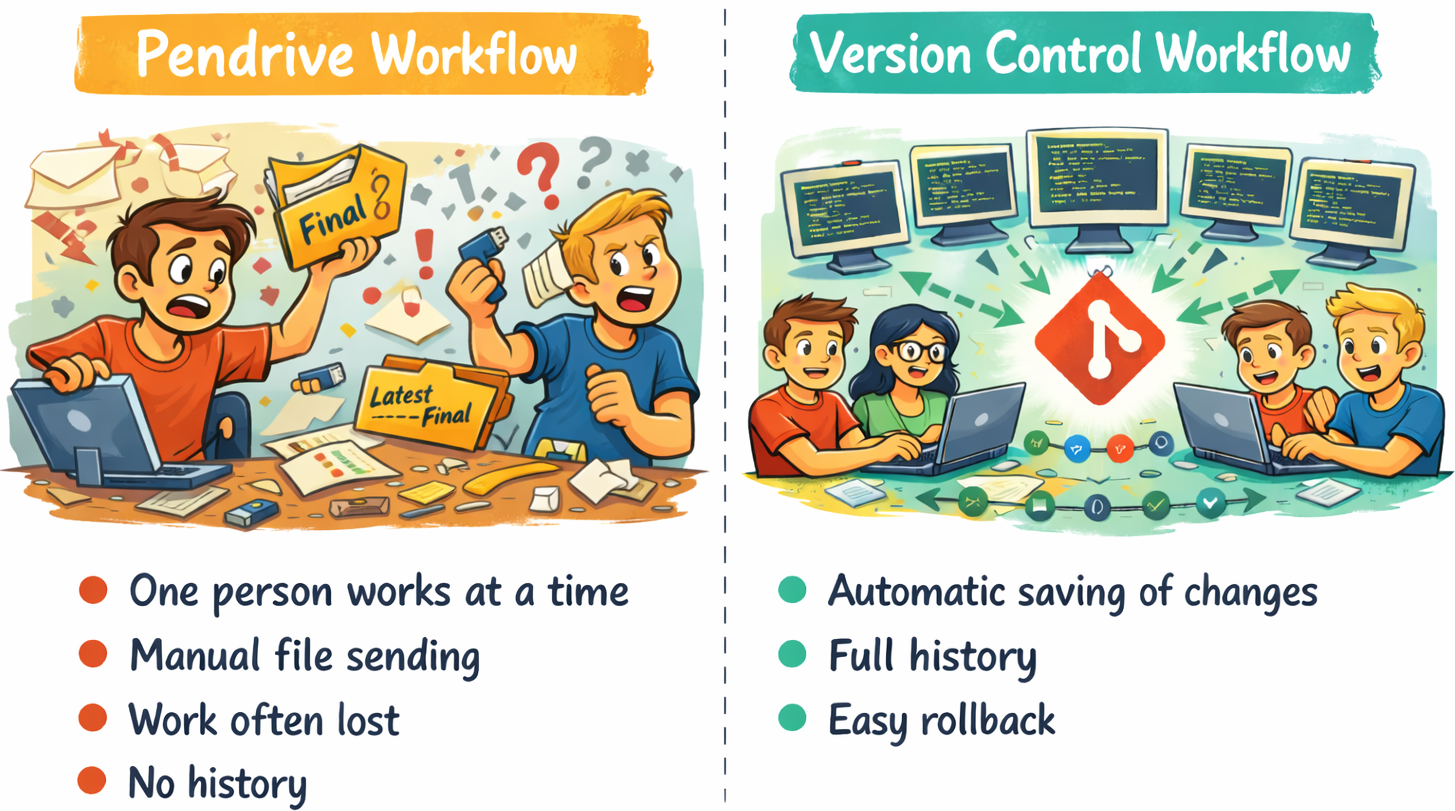
Pendrive workflow vs Version control workflow
Multiple Developers Without Version Control
Without version control:
- Developer A edits file
- Developer B edits same file
- Files are copied manually
- One version deletes the other
Result:
- Lost work
- Bugs
- Confusion
With version control:
- Changes merge safely
- Conflicts are clearly shown
- No silent data loss
Timeline: Losing vs Saving Versions
›Old System:
- Day 1: project_final
- Day 2: project_final_v2
- Day 3: project_latest
- Day 4: project_latest_final
- Day 5: wrong file sent, work lost
›With Version Control:
- Every change is saved
- Every version is safe
- Go back anytime
- Nothing is lost
Final Thought
Pendrives and emails were made to share files, not build software.
Software needs:
- History
- Safety
- Teamwork
- Control
That is why version control exists.
Today, modern software development is impossible without version control.